You are chatting with a friend. You send a message on WhatsApp. They reply with “(y)”. Now you stop and think. What does (y) mean? Many people see this in chats and feel confused. It looks like just a letter in brackets.
But in online chat, it has a special meaning.
People often use (y) on apps like WhatsApp, Instagram, Snapchat, and even old chat platforms.
It is a quick way to show approval or agreement.
Because it looks simple, many users search online to understand it.
They want to know if it means yes, good, or something else.
In this article, you will learn the simple meaning of (y).
You will also see how people use it in real chats.
What Does “(y)” Mean in Text?
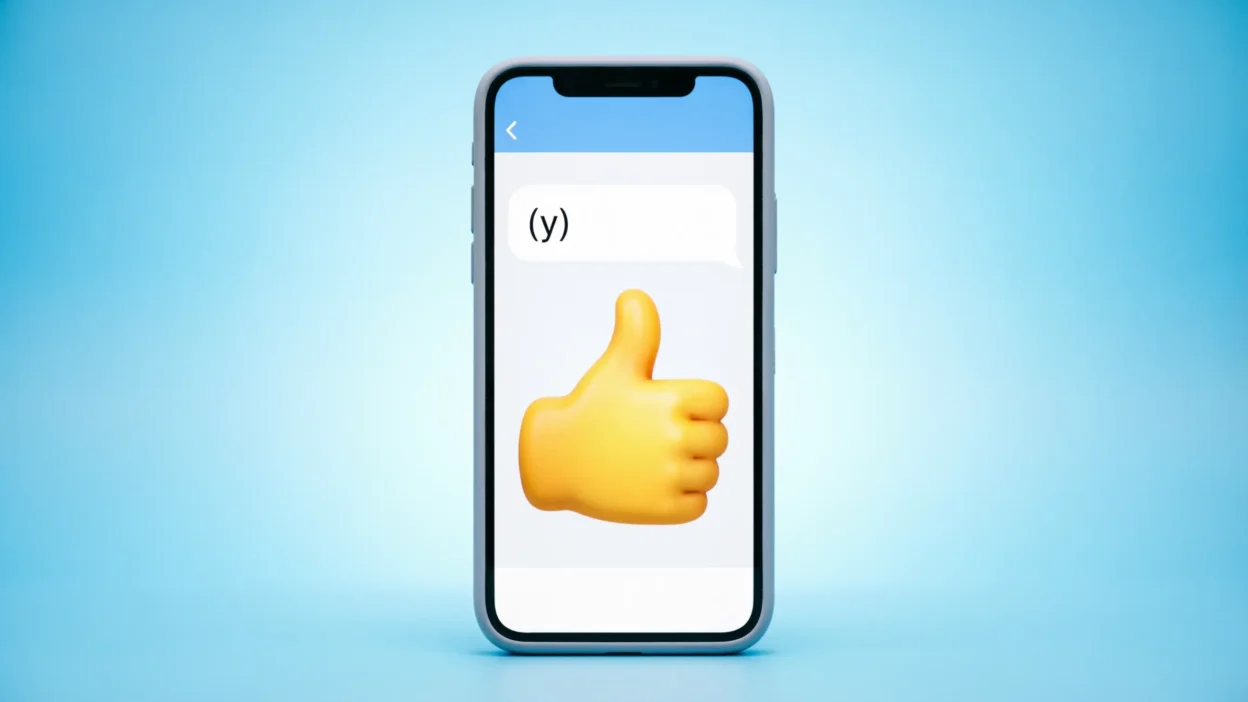
(y) means “thumbs up” or “yes / good”.
It shows approval.
It means you like something or agree with it.
In simple words, (y) = 👍
People use it to say:
- Good
- Okay
- Nice
- I agree
Full Form of “(y)”
(y) does not have a full form.
It is just a symbol used in chat.
It became popular in old chat apps like MSN Messenger and Skype.
Typing (y) would automatically turn into a thumbs up emoji.
So people still use it today.
How Is “(y)” Used in Chat?
Here are some simple examples.
Example 1
Friend: I finished the work.
You: (y)
Meaning: Good job.
Example 2
Friend: Let’s meet at 6 PM.
You: (y)
Meaning: Okay. Sounds good.
Example 3
Friend: I passed my exam.
You: (y) Nice!
Meaning: Congratulations.
What Does “(y)” Mean From a Girl / Boy?
The meaning is usually the same.
But the tone can change slightly.
From a girl:
- Friendly approval
- Support
- Agreement
Example:
“Nice photo (y)”
From a boy:
- Agreement
- Casual approval
- Quick reply
Example:
“See you at 7 (y)”
It is usually neutral and friendly.
Is “(y)” Rude or Polite?
(y) is usually polite.
It shows support or approval.
But sometimes it may feel too short.
For example:
Friend: I wrote a long message.
You: (y)
They may think you are not very interested.
So it is polite.
But it can feel lazy if used alone.
When Should You Use “(y)”?
You can use it in casual chats.
Good situations include:
- Chatting with friends
- Quick replies
- Saying “okay”
- Showing approval
- Reacting to good news
Example:
“Nice work (y)”
When Should You NOT Use “(y)”?
Avoid it in serious situations.
Do not use it when:
- Talking to your boss
- Sending professional emails
- Replying to serious messages
- Formal conversations
- School or work communication
Instead, write a full reply.
Example:
“Thank you. That sounds good.”
Best Replies to “(y)”
Here are simple replies you can send.
- “Thanks!”
- “Great!”
- “Glad you like it.”
- “Okay 👍”
- “Nice!”
These replies keep the chat friendly.
“(y)” Meaning on WhatsApp, Instagram, Snapchat
The meaning is the same on all platforms.
Used as a quick “yes” or approval.
Used in comments or DMs to show support.
Snapchat
Used in chat replies to say “okay”.
So the meaning stays thumbs up / good / yes everywhere.
Similar Slang Words Like “(y)”
Here are some related slang expressions.
👍
Thumbs up emoji. Same meaning.
OK
Simple way to agree.
K
Short form of “okay”.
Nice
Shows approval.
Cool
Means good or interesting.
FAQs
Is “(y)” positive or negative?
It is positive.
It shows approval or agreement.
Is it safe to use with elders?
It is better to use full words with elders.
“Okay” or “Yes” sounds more polite.
Is “(y)” common in daily chat?
Yes.
Many people use it in quick messages.
Does “(y)” mean thumbs up?
Yes.
It represents the thumbs up emoji.
Can “(y)” replace “okay”?
Yes.
Many people use it as a short form of okay.
Conclusion
Now you know the meaning of (y) in text. It simply means thumbs up, good, or yes. People use it to show approval in chats. It is common on WhatsApp, Instagram, and Snapchat. Just remember one thing. Use it in casual chats with friends. Avoid it in formal or professional messages. Now you can use (y) with confidence in your chats.