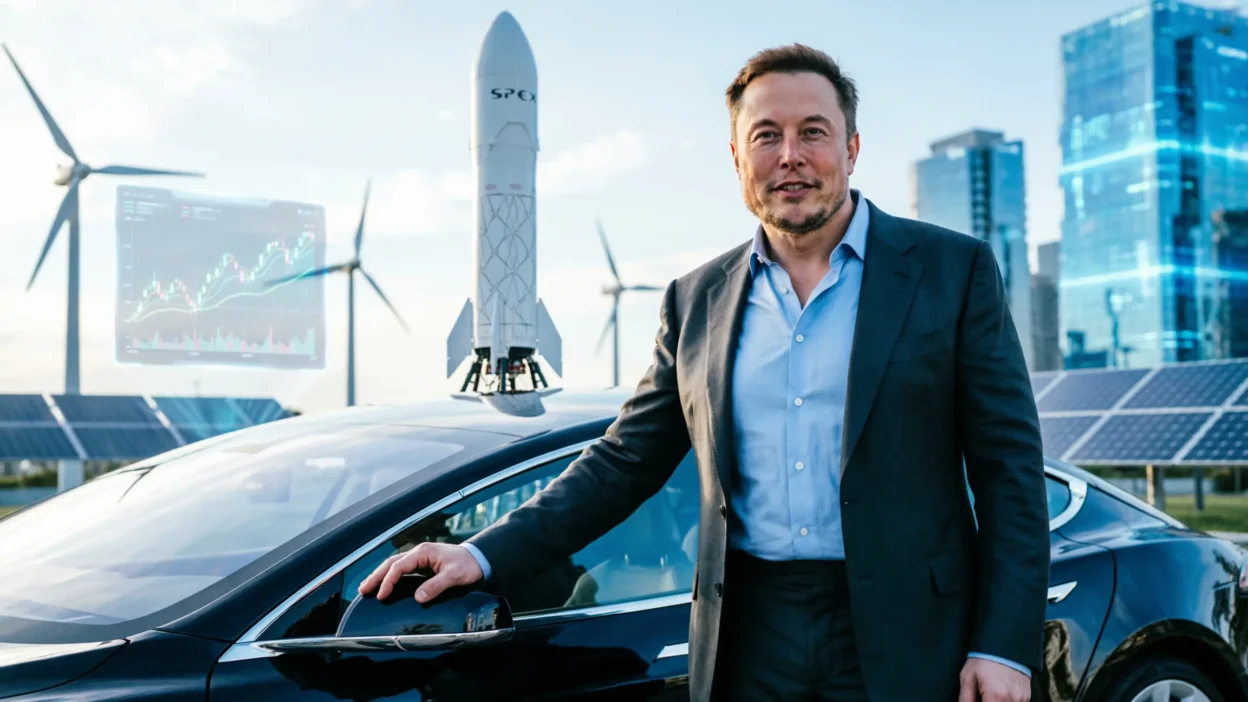
As of 2026, Elon Musk’s net worth is estimated to be around $230 billion, making him one of the richest people in the world.
- Most of his wealth comes from Tesla stock, where he holds a significant ownership stake.
- SpaceX, with its private space exploration projects and Starlink satellite internet service, also contributes a large portion of his net worth.
- Additional sources include Neuralink, The Boring Company, cryptocurrency holdings, and other investments.
Elon Musk’s net worth fluctuates frequently due to stock market changes, Tesla’s share value, and SpaceX’s private valuations. Despite market volatility, he remains at the top tier of global billionaires and continues to grow his wealth through innovative ventures and strategic investments
Early Career and Wealth Beginnings
Elon Musk was born in 1971 in Pretoria, South Africa. From a young age, he showed a passion for technology and entrepreneurship. By the age of 12, he created and sold his first software, a video game called Blastar, which earned him around $500. His early ventures laid the foundation for his future wealth.
Musk moved to the United States to study at the University of Pennsylvania, where he earned degrees in physics and economics. After college, he launched Zip2, a company that provided online business directories and maps for newspapers.
Compaq acquired Zip2 in 1999 for approximately $307 million. Elon Musk’s share of this sale was $22 million, giving him his first significant net worth milestone.
Following Zip2, Musk co-founded X.com, an online payment company that later became PayPal. PayPal was sold to eBay in 2002 for $1.5 billion in stock. Musk’s share of the sale amounted to $165 million, significantly increasing his wealth and enabling him to invest in larger ventures like Tesla, SpaceX, and SolarCity.
These early successes show Elon’s ability to identify opportunities and take calculated risks. His net worth started modestly but grew rapidly as he reinvested profits into innovative projects.
Net Worth Table – Early Career
| Year | Venture | Event | Elon Musk’s Earnings |
| 1995 | Zip2 | Company founded | – |
| 1999 | Zip2 | Sold to Compaq | $22 million |
| 1999 | X.com / PayPal | Company launched | – |
| 2002 | PayPal | Sold to eBay | $165 million |
Major Business Ventures and Wealth Sources
Elon Musk’s enormous net worth in 2026 comes primarily from his innovative business ventures. Among his most significant sources of wealth is Tesla, the electric car company he co-founded in 2004. Tesla has become a global leader in electric vehicles, solar energy, and battery technology.
Elon Musk owns a large stake in Tesla, and the company’s stock value drives the majority of his net worth. In 2026, Tesla remains a top-performing company on the NASDAQ, with Musk’s shares valued at over $150 billion.
Another major contributor to his wealth is SpaceX, Musk’s private aerospace company founded in 2002. SpaceX has revolutionized space exploration with reusable rockets, satellite internet through Starlink, and contracts with NASA and private organizations. SpaceX is privately valued at around $140 billion in 2026, and Musk owns a significant portion of the company, adding considerably to his total net worth.
Elon Musk has also invested in other ventures such as Neuralink, focused on brain-computer interfaces, and The Boring Company, which works on underground transportation solutions. These businesses, though smaller in scale than Tesla and SpaceX, continue to add value to his portfolio.
Additionally, Musk holds diversified investments in cryptocurrency, tech startups, and stock markets, which further increase his wealth. By balancing ownership in high-growth companies with smart investments, Musk has built a robust financial empire that makes him one of the wealthiest individuals in the world.
Elon Musk Net Worth Status 2026
As of 2026, Elon Musk’s net worth is estimated at approximately $230 billion, making him one of the richest people in the world. His wealth is mainly derived from his holdings in Tesla and SpaceX, with other business ventures, investments, and assets contributing as well. Musk’s net worth has fluctuated over the years due to stock market changes, company valuations, and public events, but his strategic investments have consistently maintained his position among the top global billionaires.
Tesla continues to be the largest contributor to Musk’s wealth. His stake in Tesla is valued at over $150 billion, reflecting the company’s dominance in electric vehicles and renewable energy. SpaceX, a private company with a valuation of around $140 billion, also adds significantly to his net worth. Musk owns the majority of SpaceX shares, benefiting from both operational success and future growth potential.
Other income sources include Neuralink, The Boring Company, cryptocurrency holdings, and diversified stock investments, which collectively add billions more. Musk’s wealth is not only from active company ownership but also from intellectual property, patents, and strategic business acquisitions.
Net Worth Table – 2026 Breakdown
| Source/Asset | Estimated Value (2026) |
| Tesla Shares | $150 billion |
| SpaceX | $140 billion |
| The Boring Company & Neuralink | $5 billion |
| Cryptocurrency & Stocks | $20 billion |
| Real Estate & Other Assets | $15 billion |
| Total Estimated Net Worth | $230 billion |
Assets and Properties
Elon Musk’s net worth is not just tied to his business ventures; it is also supported by diverse assets and luxurious properties. Over the years, Musk has invested in real estate, luxury vehicles, private jets, and other high-value possessions, reflecting both his wealth and personal lifestyle.
Musk previously owned several mansion properties in California, including multiple homes in the Bel Air and Los Angeles areas, which he sold between 2020 and 2022 as part of a personal decision to downsize and simplify his lifestyle. Despite selling many homes, he retains select real estate holdings, primarily as vacation or investment properties.
In addition to real estate, Musk has invested in high-value vehicles and private aircraft. He owns a Gulfstream G650ER private jet, which he uses for business travel between Tesla, SpaceX, and other ventures. His interest in unique vehicles is also reflected in Tesla prototypes and other innovative cars he personally drives.
Musk also holds intellectual property, patents, and business equity in his companies, which are considered part of his broader asset portfolio. Additionally, his stakes in cryptocurrency and technology startups enhance the value of his overall assets.
While Musk is known for a comparatively modest personal lifestyle compared to other billionaires, his strategically acquired assets play a key role in maintaining and growing his wealth. These assets provide both financial security and the means to support his high-profile business and personal endeavors.
Income Sources
Elon Musk’s massive net worth comes from a variety of income streams, combining active business roles, investments, and strategic holdings. While most billionaires rely heavily on one or two sources, Musk has built a diversified portfolio that contributes to his financial stability.
The largest portion of Musk’s income comes from Tesla, where he serves as CEO and product architect. Although he takes a minimal salary, his wealth grows primarily through stock options and ownership stakes. Tesla’s consistent growth in the stock market has allowed Musk to generate billions in unrealized gains, which significantly boosts his net worth each year.
SpaceX is another major source of income. Although it is a private company, Musk benefits from equity in SpaceX. The company’s contracts with NASA, private satellite launches, and the Starlink internet service generate substantial revenue. Any increase in the company’s private valuation directly impacts Musk’s net worth.
Musk also earns from Neuralink and The Boring Company, both of which he co-founded and holds equity in. While these ventures are smaller compared to Tesla and SpaceX, they add diversification to his portfolio and potential long-term gains.
In addition, Elon Musk holds investments in cryptocurrency, stocks, and technology startups. His cryptocurrency holdings, including Bitcoin and Dogecoin, have added substantial wealth during periods of market growth.
Finally, Musk generates income from intellectual property, patents, and business consulting, which supplement his earnings. By combining multiple revenue streams, Elon Musk ensures that his net worth continues to grow, even during periods of market volatility.
Net Worth Growth Over the Years
Elon Musk’s net worth has grown dramatically over the past two decades, reflecting his entrepreneurial skill, risk-taking, and strategic investments. From modest beginnings, Musk has steadily transformed himself into one of the richest individuals in the world.
In 1995, Musk co-founded Zip2, an online city guide software company. When Compaq acquired Zip2 in 1999, Musk earned $22 million, marking his first significant wealth milestone. Shortly afterward, he co-founded X.com, which later became PayPal, sold to eBay in 2002 for $1.5 billion. Musk’s share of the sale amounted to $165 million, giving him the capital to invest in ambitious ventures like Tesla and SpaceX.
Tesla’s growth has been a primary driver of his wealth. From 2004, when Musk joined as investor and CEO, Tesla gradually grew from a small electric car startup into a global leader in EVs, solar power, and batteries. Tesla’s stock value skyrocketed in the 2010s and early 2020s, significantly increasing Musk’s net worth. By 2020, he became a billionaire multiple times over, surpassing $100 billion in net worth.
SpaceX, founded in 2002, has contributed another major boost. With successful rocket launches, NASA contracts, and Starlink internet satellites, SpaceX’s valuation reached around $140 billion in 2026, adding heavily to Musk’s wealth.
Overall, Elon Musk’s net worth grew from a few million in 1999 to $230 billion in 2026, thanks to Tesla, SpaceX, strategic investments, and diversification. His financial trajectory highlights the power of innovation, risk-taking, and reinvesting profits into high-growth ventures.
Lifestyle and Public Persona
Elon Musk is known not only for his wealth but also for his distinctive lifestyle and public image. Unlike many billionaires who flaunt luxury excessively, Musk maintains a practical approach to personal life while investing heavily in ventures that reflect his futuristic vision.
Musk has sold most of his real estate holdings in recent years, choosing to live modestly compared to other billionaires. He primarily resides in a prefabricated tiny house near SpaceX in Texas, emphasizing functionality over extravagance. Despite this simplicity, he owns a Gulfstream G650ER private jet, which allows him to travel efficiently between Tesla, SpaceX, and other commitments worldwide.
Musk’s lifestyle is closely tied to his work ethic and ambitious goals. He often works long hours and maintains a highly demanding schedule, which is widely publicized. His public persona is shaped by his social media presence, particularly on Twitter (now X), where he interacts with millions of followers, shares updates on his companies, and occasionally sparks controversy.
In addition to his work, Musk is recognized for his visionary projects in space exploration, renewable energy, and artificial intelligence. His innovative mindset and bold predictions about the future have made him a global figure and a symbol of technological advancement.
While Musk’s lifestyle choices appear simple, his wealth, influence, and reputation make him one of the most high-profile figures in business. His combination of innovation, risk-taking, and public engagement ensures that his name remains synonymous with progress and futuristic entrepreneurship.
Challenges and Controversies Affecting Wealth
Elon Musk’s path to wealth has not been without challenges and controversies. Despite being one of the richest individuals in the world, his financial journey has faced hurdles ranging from market volatility to public scrutiny and legal disputes.
Tesla’s stock, a major driver of Musk’s net worth, has experienced significant fluctuations over the years. Market downturns, production delays, and global economic conditions have caused temporary dips in his net worth, demonstrating the volatile nature of equity-based wealth. Similarly, SpaceX, although privately valued, faces risks related to rocket failures, regulatory approvals, and competition in the aerospace sector.
Musk has also faced legal and regulatory challenges. He has been involved in high-profile lawsuits, SEC investigations, and disputes over his tweets, which have sometimes affected investor confidence. For instance, statements on social media regarding company performance or cryptocurrency markets have occasionally led to market volatility and public criticism.
Additionally, Musk’s bold and sometimes controversial decisions—such as relocating Tesla’s headquarters to Texas or pursuing ambitious projects like Neuralink—have drawn scrutiny from media and investors. These events, while demonstrating his visionary approach, also expose his wealth to potential risks.
Despite these challenges, Elon Musk has shown resilience and adaptability. His ability to navigate market fluctuations, address legal concerns, and continue pursuing innovative ventures has allowed him to maintain and grow his wealth. By managing controversies strategically, Musk ensures that temporary setbacks do not derail his long-term financial trajectory.
Philanthropy and Donations
Although Elon Musk is widely known for his astronomical net worth, he has also engaged in philanthropic efforts and charitable donations over the years. His approach to giving reflects his interest in solving global challenges, particularly in technology, energy, and sustainability.
Musk has donated to renewable energy initiatives, including solar power projects and research into sustainable technologies. Through his foundation, he has supported programs aimed at reducing climate change impacts and promoting clean energy solutions. These donations, while a small fraction of his overall net worth, align closely with his business philosophy at Tesla and SolarCity.
In education, Musk has contributed to STEM programs and science education initiatives. He has funded projects for young innovators, helping schools and universities improve access to science, technology, engineering, and math education. Musk’s commitment to education demonstrates his long-term vision of preparing the next generation for technological advancements.
Musk has also made donations to humanitarian causes. These include support for hospitals, COVID-19 relief efforts, and disaster response projects. During the COVID-19 pandemic, he donated ventilators and medical supplies to help affected communities.
While philanthropy has not been Musk’s primary public focus, his strategic contributions have a lasting impact. By targeting technology, sustainability, and humanitarian aid, he ensures that his charitable actions support areas that align with his mission to advance humanity and solve pressing global problems.
Through these efforts, Elon Musk demonstrates that extreme wealth can be used for meaningful global impact, even while maintaining a high-profile business career.
Future Outlook
Looking ahead, Elon Musk’s net worth is expected to continue growing significantly in the coming years. His strategic investments in cutting-edge technologies and high-growth industries position him to remain among the wealthiest people on the planet.
Tesla, for example, is likely to expand globally, introducing new models, battery technologies, and renewable energy solutions. As the world increasingly shifts toward electric vehicles and clean energy, Tesla’s market dominance will continue to fuel Musk’s wealth. Similarly, SpaceX is projected to grow through commercial satellite launches, Starlink internet expansion, and potential Mars colonization projects, creating long-term value for Musk and his investors.
Musk’s ventures in Neuralink and The Boring Company also show potential for wealth generation, though they are currently smaller in scale. Neuralink could revolutionize brain-computer interfaces, and The Boring Company may transform urban transportation with tunnels and hyperloop technologies. Both ventures could become major contributors to Musk’s net worth in the future.
Additionally, Musk’s investments in cryptocurrencies, AI, and tech startups diversify his portfolio, providing opportunities for further growth. His ability to identify emerging markets and invest early in high-potential ventures has been a hallmark of his career.
While market volatility and global economic conditions may occasionally affect his net worth, Elon Musk’s innovative mindset, leadership, and diversified assets suggest a robust financial future. Analysts predict that, if current trends continue, Musk’s net worth could surpass $300 billion within the next decade, securing his legacy as one of the most influential entrepreneurs in history
Conclusion
Elon Musk’s journey from a young tech enthusiast in South Africa to one of the wealthiest people in the world is truly remarkable. His net worth of approximately $230 billion in 2026 reflects decades of hard work, innovation, and strategic risk-taking. From the early success of Zip2 and PayPal to his transformative ventures with Tesla and SpaceX, Musk has consistently demonstrated the ability to identify opportunities that shape industries and impact the global economy.
Musk’s wealth is supported by diversified income sources, including business equity, stock options, cryptocurrency, real estate, and other strategic investments. Despite facing market fluctuations, controversies, and challenges, he has maintained his position as a top-tier billionaire due to his resilience, vision, and ability to innovate.
Beyond financial success, Musk’s influence extends to technology, renewable energy, space exploration, and education. His philanthropic contributions, while smaller relative to his overall wealth, focus on solving global problems and supporting STEM initiatives, further highlighting his commitment to positive impact.
Looking to the future, Elon Musk’s net worth is expected to continue growing as his companies expand and new technologies emerge. His story serves as an example of how vision, innovation, and strategic investments can lead to extraordinary financial success.
In summary, Elon Musk is not only a billionaire by numbers but also a visionary entrepreneur whose impact on industries and society will be felt for generations. His journey teaches us that risk-taking, creativity, and persistence are key drivers of both wealth and meaningful contributions to the world.
FAQs (Frequently Asked Questions)
- What is Elon Musk’s net worth in 2026?
Elon Musk’s net worth is estimated at approximately $230 billion in 2026. - What are the main sources of Elon Musk’s wealth?
His wealth comes primarily from Tesla, SpaceX, Neuralink, The Boring Company, cryptocurrency investments, and other stock holdings. - How did Elon Musk become a billionaire?
Musk earned his initial wealth from Zip2 and PayPal, then invested heavily in Tesla and SpaceX, which grew significantly over the years. - Does Elon Musk donate to charity?
Yes, Musk contributes to philanthropy, including renewable energy projects, STEM education programs, humanitarian aid, and COVID-19 relief efforts.
Will Elon Musk’s net worth continue to grow?
Analysts predict his net worth may surpass $300 billion in the next decade, thanks to Tesla, SpaceX, and new ventures in technology and space exploration.