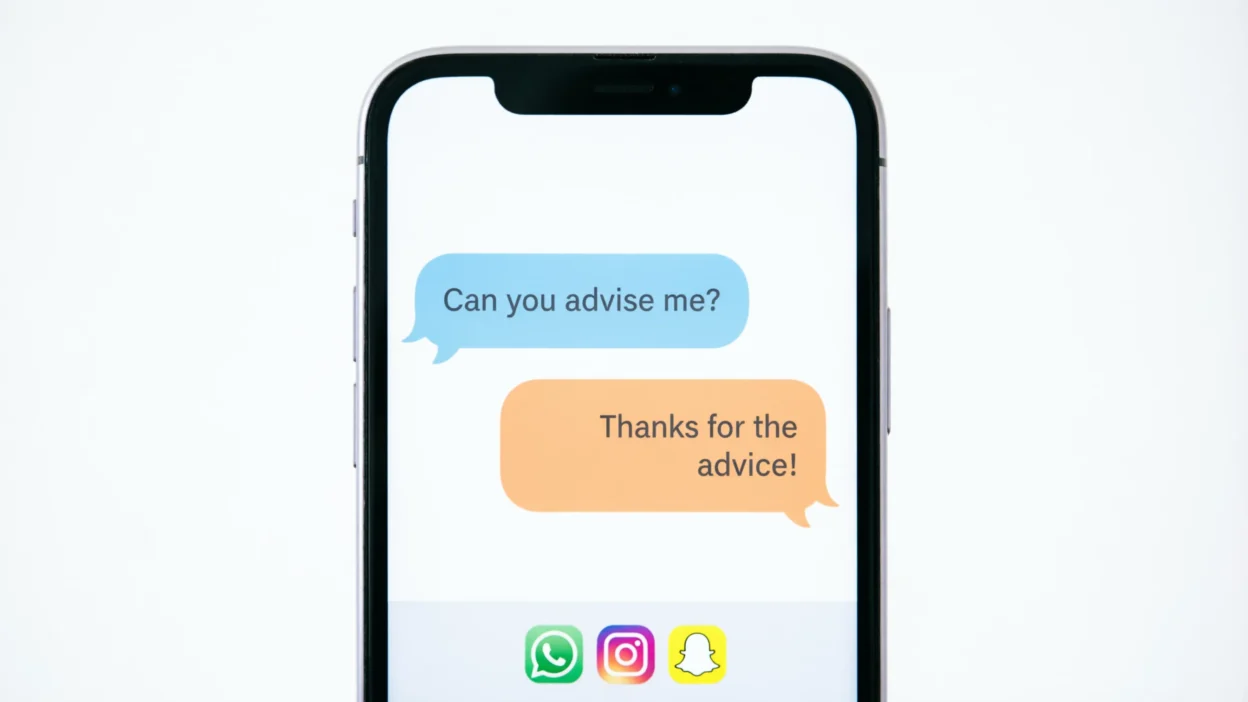
You may see this in chat. Your friend writes: “Can you advise me?” Or someone says:
Thanks for the advice!” Many people feel confused here.
Both words look almost the same.
But they do not mean the same thing.
This is why many people search “advise vs advice meaning in text.”
They see these words on WhatsApp, Instagram, Snapchat, or messages.
Then they wonder which one is correct. The truth is simple. One word is an action. The other word is a thing.
In this guide, you will learn the difference in very easy words.
You will also see chat examples and when to use each one.
What Does “Advise vs Advice” Mean in Text?
Advise means to give a suggestion or guidance.
Advice means the suggestion or guidance itself.
Simple rule:
- Advise = action (verb)
- Advice = thing (noun)
Example:
- “I will advise you.”
- “Thank you for the advice.”
Full Form of “Advise vs Advice”
There is no full form.
These are normal English words.
They are not abbreviations or internet slang.
People just confuse them because the spelling looks very similar.
How Is “Advise vs Advice” Used in Chat?
Here are some simple chat examples.
Example 1
Friend: I want to start a business.
You: I can advise you.
Example 2
Friend: Thank you for the advice yesterday.
Example 3
Friend: Can you advise me about this job?
These examples show the difference clearly.
- Advise = doing the helping
- Advice = the help itself
What Does “Advise vs Advice” Mean From a Girl / Boy?
The meaning is the same from a girl or a boy.
But the tone can change depending on the message.
Possible tones:
Friendly
“Can you advise me about this?”
Serious
“I need your advice.”
Respectful
“Thank you for your advice.”
Usually, these words show trust.
The person believes you can help them.
Is “Advise vs Advice” Rude or Polite?
These words are polite.
They are often used in helpful conversations.
Examples:
- Asking for help
- Giving guidance
- Thanking someone
But tone can feel rude if used like this:
“Take my advice and stop talking.”
Here it may sound bossy or harsh.
So always use it kindly.
When Should You Use “Advise” or “Advice”?
Use these in casual chats or normal conversations.
You can use them when:
- Asking someone for help
- Giving suggestions to a friend
- Talking about life decisions
- Helping someone solve a problem
- Thanking someone for guidance
These words are common in daily chat.
When Should You NOT Use “Advise” or “Advice”?
Avoid using them wrongly in:
- Formal emails
- Job applications
- Business communication
- School essays (if spelling is wrong)
Also avoid mixing them like this:
❌ “Thank you for advise.”
✔ “Thank you for advice.”
Best Replies to “Advise” or “Advice”
Here are simple replies you can send.
- “Sure. I will help you.”
- “My advice is to stay calm.”
- “Let me think and advise you.”
- “That is good advice.”
- “Thanks for asking me.”
These replies sound natural and friendly.
“Advise vs Advice” Meaning on WhatsApp, Instagram, Snapchat
The meaning does not change on different apps.
It stays the same on:
- Snapchat
- Messenger
- Text messages
People use these words everywhere online.
But spelling mistakes happen often.
So remember the rule:
- Advise = action
- Advice = suggestion
Similar Slang Words Like “Advise vs Advice”
Here are some related words people use in chat.
Tip
A small helpful suggestion.
Suggestion
An idea to help someone.
Recommendation
Advice about what is best.
Guidance
Help or direction.
Opinion
What someone thinks about something.
FAQs
Is “advise vs advice” positive or negative?
It is usually positive.
It shows help and guidance.
Is it safe to use with elders?
Yes.
Both words are polite and respectful.
Is it common in daily chat?
Yes.
People use it often in messages and conversations.
Which one is the verb?
Advise is the verb.
Example: I advise you to rest.
Which one is the noun?
Advice is the noun.
Example: Thank you for the advice.
Conclusion
Now you know the difference between advise and advice. The rule is simple:
- Advise = to give help or suggestion
- Advice = the suggestion itself
Many people mix these words in chat. But now you can use them correctly. Next time someone asks for help on WhatsApp or Instagram, you will know the right word to use. Learning small word differences like this makes your English clear and confident. You can also explore more text and chat meanings to improve your daily communication.